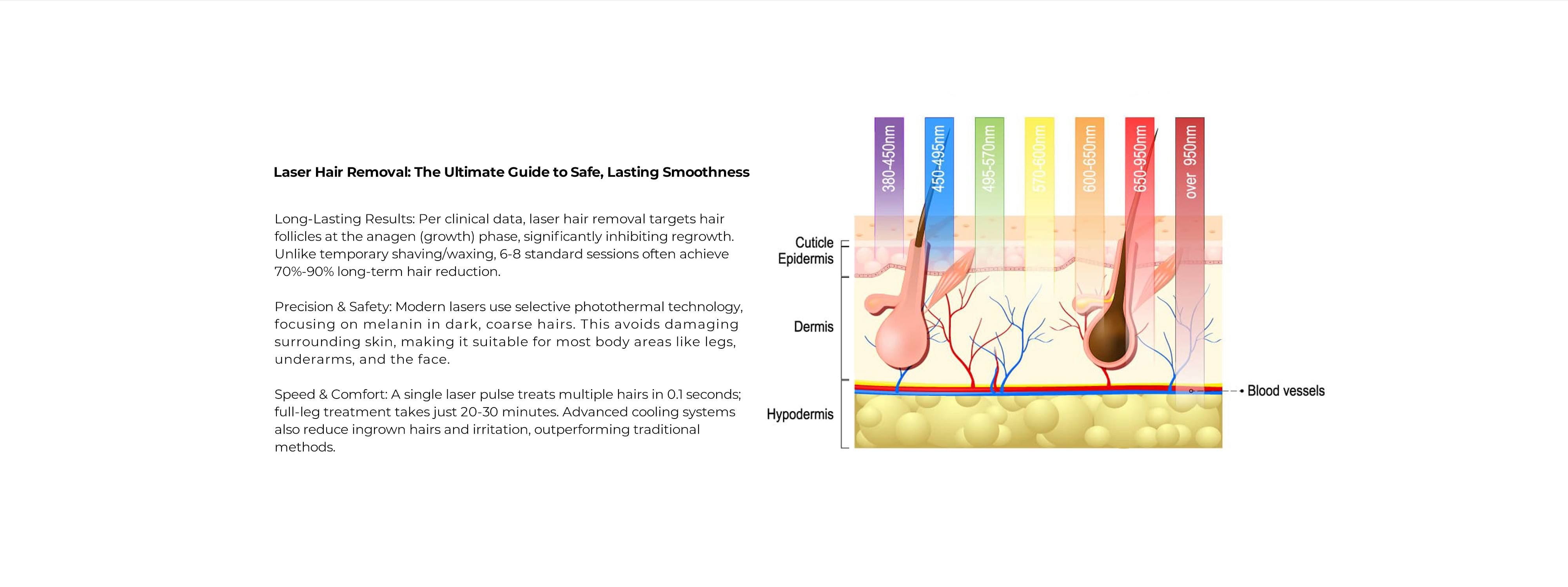
Smooth skin is often associated with shaving, waxing, or other short-term methods, yet the experience of professional hair reduction is quite different. Laser hair removal treatment works by directing concentrated light toward pigment within the hair, allowing thermal energy to reach the follicle during suitable stages of its growth cycle. Since follicles do not all develop simultaneously, treatment usually takes place across several appointments rather than in one visit.
Understanding the process, preparation requirements, sensation, and expected changes can make the first appointment much easier to approach. With this clinical perspective in mind, ENZOEYS provides a useful reference point for understanding how professional equipment fits into modern aesthetic practice.
How Laser Energy Interacts With Hair
Hair follicles pass through several stages, including anagen, catagen, and telogen. The anagen phase is particularly relevant because the follicle contains more active pigment that can interact with the emitted light. Laser hair removal treatment is consequently performed over a series of visits, giving different groups of follicles an opportunity to reach a more responsive stage.
Hair color and thickness can affect how much optical energy is absorbed. Darker, coarser hair generally contains more melanin than very light or fine hair, while gray, white, and some red hairs can respond differently because of their pigment characteristics. Skin tone also matters because melanin exists in the surrounding skin as well as the hair.
Body area introduces another variable. Facial hair, underarms, legs, bikini areas, and other regions can have different growth patterns, density, and sensitivity. A professional assessment considers these differences before treatment parameters are selected, rather than applying identical settings across every part of the body.
Preparing Before the First Appointment
Preparation begins several days or weeks before the appointment, depending on the area and the clinic’s protocol. Shaving is commonly preferred because it leaves the hair shaft short while keeping the follicle beneath the skin accessible to the laser. Waxing or plucking may be discouraged because these methods remove the hair from the follicle.
Sun exposure deserves particular attention. Recently tanned skin can contain increased melanin, which may affect how light is absorbed and can influence the parameters considered appropriate for treatment. Clinics should follow the clinic’s instructions regarding tanning, self-tanners, skincare products, and sun protection before arriving.
A consultation should also cover medications, skin conditions, previous hair-removal methods, and any history of unusual reactions to light-based procedures. Hair removal laser treatment is not simply a matter of applying the highest available energy; appropriate settings depend on individual characteristics and the treatment area.
What Happens During Treatment
During an appointment, the treatment area is typically cleaned and prepared before the handpiece is applied to the skin. Depending on the device and protocol, cooling may be used to improve comfort and help manage heat at the surface. Protective eyewear is also important whenever the procedure involves laser emission.
The sensation varies from person to person and from one body region to another. Some clients describe individual pulses as brief snaps or pinpricks, while dense areas may feel warmer because more follicles are being treated within a small space. Cooling and suitable pulse parameters can influence the overall experience.
Modern professional equipment can offer different wavelengths, spot sizes, pulse frequencies, and cooling approaches. For example, the SuperTouch S500 uses 755, 808, and 1064 nm wavelengths with interchangeable spot sizes, allowing treatment parameters to be adapted to different areas and hair characteristics. Its cooling handpiece is designed for professional use across repeated treatment sessions.
Understanding Changes After Treatment
Visible results do not usually appear as immediate hair loss across the entire treatment area. Treated hairs may remain visible temporarily before gradually shedding, while follicles in other growth stages may continue producing hair. This distinction helps explain why several appointments are normally required.
Temporary redness, warmth, or mild swelling around individual follicles can occur after treatment. These reactions often reflect the skin’s response to the delivered energy, but clients should follow the specific aftercare guidance provided by the treating professional. Excessive heat, prolonged sun exposure, and unnecessary irritation are generally best avoided immediately afterward.
Over successive appointments, hair may appear finer, less dense, or slower to return. Laser hair removal treatment can produce substantial long-term reduction, but results vary according to hair color, skin characteristics, hormonal influences, treatment area, and individual follicle behavior. Maintenance sessions may also be discussed depending on how the treated area changes over time.
Conclusion
A first appointment becomes easier to understand once the procedure is viewed through the biology of hair growth, skin response, and individualized parameter selection. Laser hair removal treatment involves more than the visible pulse itself: preparation, treatment intervals, aftercare, and gradual follicular response all contribute to the overall experience. Clients who understand these stages can discuss realistic expectations more effectively with qualified professionals.
For clinics reviewing equipment and treatment approaches, ENZOEYS offers a reference for considering how wavelength selection, cooling, and treatment flexibility relate to practical hair-reduction procedures. Hair removal laser treatment remains a process that requires patience, appropriate assessment, and consistent professional care rather than instant results.
