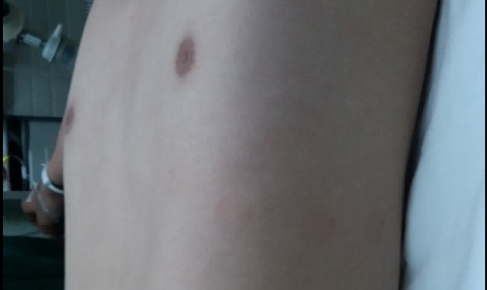
Within the category of chest wall deformities, flattened chest (Platythorax) refers to a significant shortening of the anteroposterior diameter of the chest, which gradually results in a flattened appearance. Visually, the torso appears flattened, and the distance between the sternum and the spine is much shorter than in a normal skeletal structure.
Symptoms and Manifestations
Platythorax chest is commonly seen in tall, thin young people. Because the appearance is not very prominent, it is often mistaken for simply being underweight rather than a chest wall deformity. Most patients do not experience significant discomfort in their daily lives; only in severe cases may mild respiratory discomfort occur after exercise. Some patients may develop feelings of inferiority due to the flat appearance of their chest, which can even lead to psychological problems. Clinically, a flat chest is also prone to being associated with spontaneous pneumothorax and is often only discovered when patients seek treatment for pneumothorax.
Diagnosis and Treatment
The diagnosis of flattened chest is relatively simple and can usually be confirmed through physical examination. Imaging studies are mainly used to assess cardiac compression and the presence of pulmonary bullae, providing a basis for surgical planning. Whether surgery is necessary should be determined based on the patient’s overall condition: if the deformity affects appearance or causes discomfort, surgical correction may be considered; if there are no significant symptoms, observation and follow-up may be chosen. In recent years, the Wung procedure designed by ICWS has improved upon traditional surgical techniques, enhancing surgical safety and postoperative recovery efficiency.
Leading-Edge Surgical Restoration
Correction of flat chest deformity requires an individualized surgical strategy. The Institute of Chest Wall Surgery (ICWS) specializes in treating complex chest wall conditions using refined techniques tailored to each patient. By elevating the anterior chest wall, surgery can improve chest contour and relieve organ compression, helping patients achieve better physical comfort and confidence.
