Modern campus design has shifted significantly toward creating multifunctional, collaborative, and technologically integrated spaces. The auditorium is no longer a static room for lectures; it is a hub for community events, digital presentations, and interactive learning. Choosing the “best” seating solution for these environments is a complex challenge because it requires a balance of spatial efficiency, ergonomic comfort, and long-term durability. Educational institutions must consider everything from sightlines and acoustic properties to the integration of power outlets and data ports. After assessing various options based on manufacturing standards, design innovation, and project history, we have identified ten companies that are currently setting the benchmark for educational environments.
Selecting a manufacturer involves evaluating specialized engineering and material quality to ensure the investment lasts for decades.
Full List of Top 10 Auditorium Seating Brands
- Leadcom Seating
- Ferco Seating
- KI
- Sedia Systems
- Hussey Seating
- Skeie
- Toda Furniture
- Martin Public Seating
- School Outlet
- H2I Group
Identifying these leaders is the first step toward understanding which specific features align with different architectural goals.
Comparison Table
| Brand | Key Products | Key Features | Best For |
| Leadcom Seating | Performer, Integrator, LS-10601 | Vertical-fold mechanisms, custom upholstery | High-capacity lecture halls and arts centers |
| Ferco Seating | Primera, Beaufort Series | Acoustic dampening, integrated tablets | Performance-focused university theaters |
| KI | University, Concerto | Fixed seating with swing-away options | Traditional lecture halls with heavy traffic |
| Sedia Systems | JumpSeat, FT20 | Space-saving profiles, minimalist design | Narrow footprint and compact tiered spaces |
| Hussey Seating | Quattro, Telescopic Series | Retractable seating options, heavy-duty | Multi-use campus gymnasiums and arenas |
| Skeie | Skeie | Scandinavian design, modularity | High-end comfort and aesthetic-focused halls |
| Toda Furniture | Educational Series | Functional simplicity, durability | Mid-range budget campus projects |
| Martin Public Seating | Distributor models | Procurement efficiency, local support | K-12 and regional college refurbishments |
| School Outlet | Collaborative Seating | High inventory levels, quick shipping | Standardized educational furniture needs |
| H2I Group | Fixed Seating Solutions | Turnkey laboratory and hall solutions | Comprehensive technical campus installations |
While a side-by-side comparison provides a quick overview, a deeper look into each company’s specialized capabilities reveals how they cater to specific campus needs.
Detailed Reviews
1. Leadcom Seating
Leadcom Seating is a global manufacturer recognized for its vertical integration, handling everything from design and engineering to manufacturing and installation in-house. This control over the production process allows for a high degree of customization, which is essential for contemporary campuses that often require unique configurations or specific technological integrations. Their auditorium seating solutions are engineered to meet international safety and durability standards, such as BIFMA and ANSI.
Pros / Key Features:
- Engineering Excellence: Many of their models feature gravity-tilt or spring-tension return mechanisms that ensure silent operation and longevity.
- Spatial Efficiency: Their designs often prioritize a slim profile without compromising lumbar support, maximizing the number of seats within a given footprint.
- Customization: They offer a wide array of writing tablets, including integrated anti-panic tablets that stow away efficiently.
- Quality Assurance: Utilizing high-density cold-molded foam and robust steel frames, their products are built to withstand the rigors of high-traffic campus life.
Use Cases:
Leadcom is ideally suited for large-scale university lecture halls and performing arts centers where durability and sophisticated aesthetics must coexist.
2. Ferco Seating
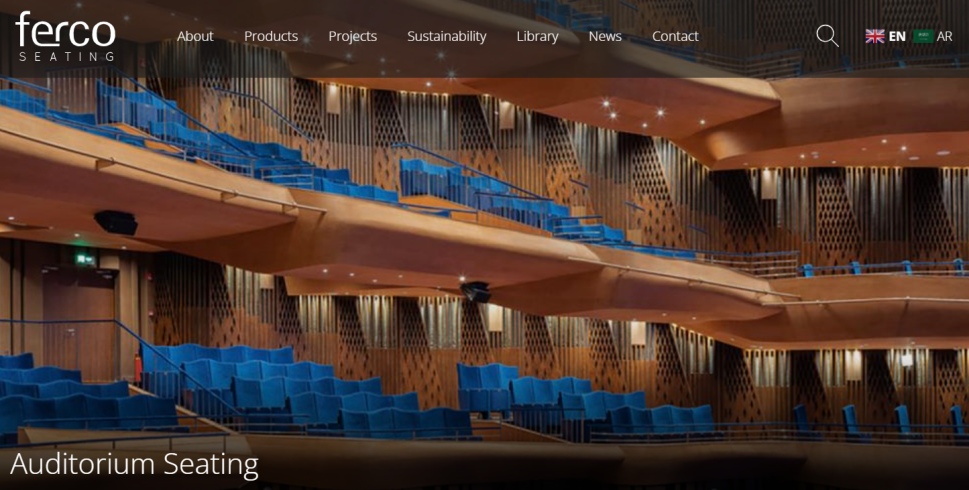
Ferco Seating specializes in providing auditorium solutions that emphasize audience comfort and acoustic performance. Their products are often found in professional theaters and high-end university venues where the “feel” of the room is as important as its functionality.
Pros / Key Features:
- Acoustic Management: Many chairs are designed with perforated seat pans or specific padding densities to help maintain room acoustics whether the seat is occupied or empty.
- Integrated Tech: They offer power and data integration options directly into the armrest or pedestal.
Use Cases:
Best for campus music halls, university theaters, and specialized graduate school lecture rooms.
3. KI
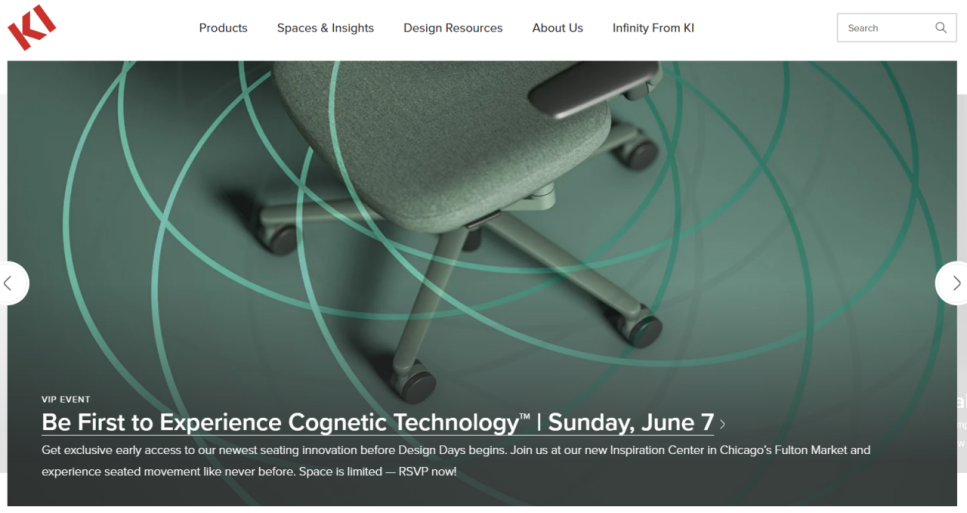
KI is a staple in the North American educational market, focusing heavily on the specific needs of classroom and lecture hall environments. Their designs are functional and prioritized for “active learning” layouts.
Pros / Key Features:
- Swing-Away Options: Their fixed seating often includes swing-away pedestals that allow students to rotate and interact during group work.
- Durability: Their products use materials that are easy to clean and resistant to vandalism.
Use Cases:
Standard university lecture halls and environments where student collaboration is encouraged within a fixed seating layout.
4. Sedia Systems
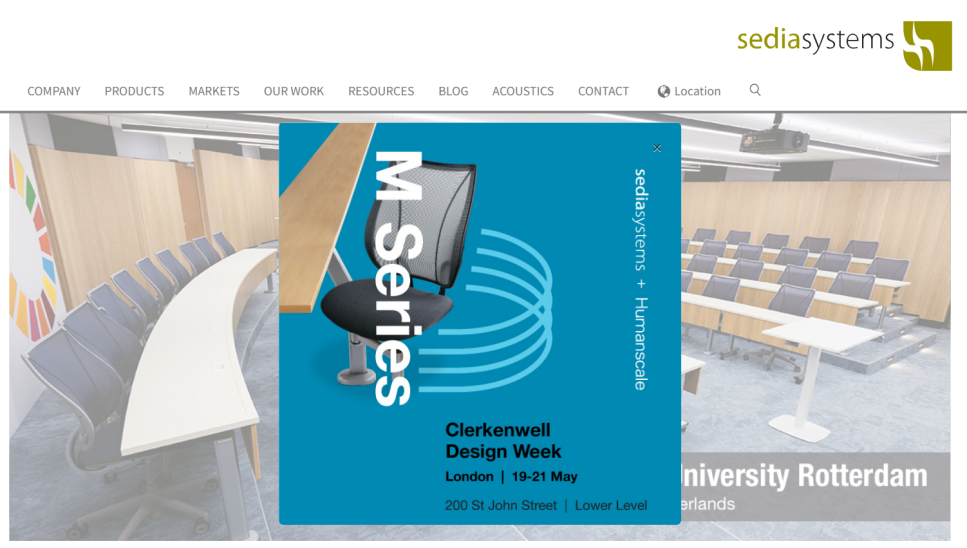
Sedia Systems is known for its architectural approach to seating. They often collaborate with high-profile architects to create minimalist, modern environments that utilize every square inch of space efficiently.
Pros / Key Features:
- The JumpSeat: A signature product that relies on a cantilevered structure without moving parts, folding to a depth of less than 4 inches.
- Modern Aesthetics: Their designs are often very sleek, utilizing wood veneers and clean lines.
Use Cases:
Contemporary campus corridors, small tiered classrooms, and hallways where space is at a premium.
5. Hussey Seating
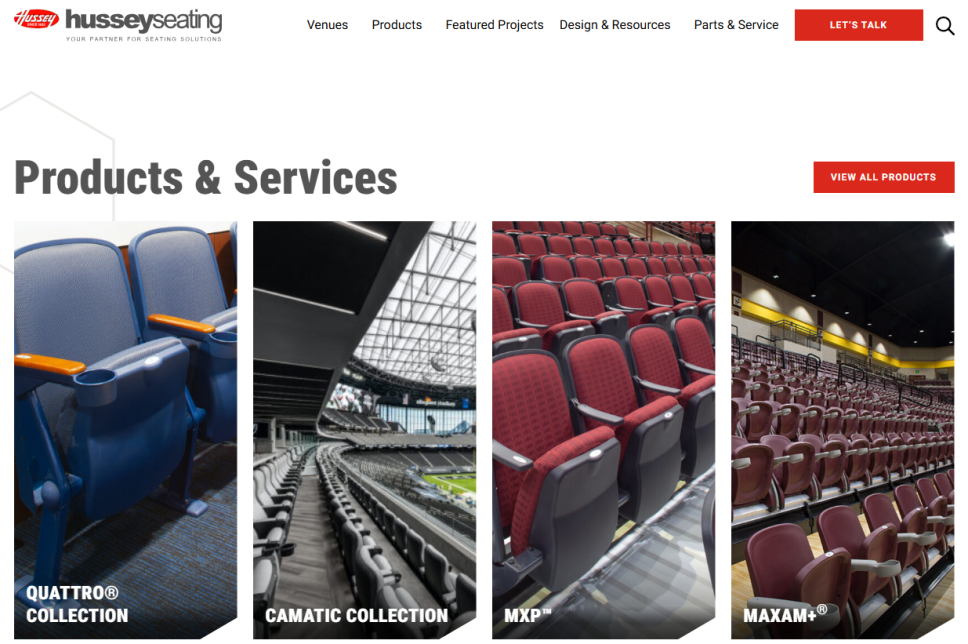
A company with a long history in spectator seating, Hussey is a leader in retractable and telescopic seating systems, allowing campus spaces to be truly multi-purpose.
Pros / Key Features:
- Retractable Systems: Their telescopic seating allows a gymnasium to transform into a lecture space in minutes.
- Modular Design: The Quattro series offers significant flexibility in terms of back height and accessory options.
Use Cases:
Multi-purpose sports arenas and flexible learning centers that require the ability to clear the floor for different activities.
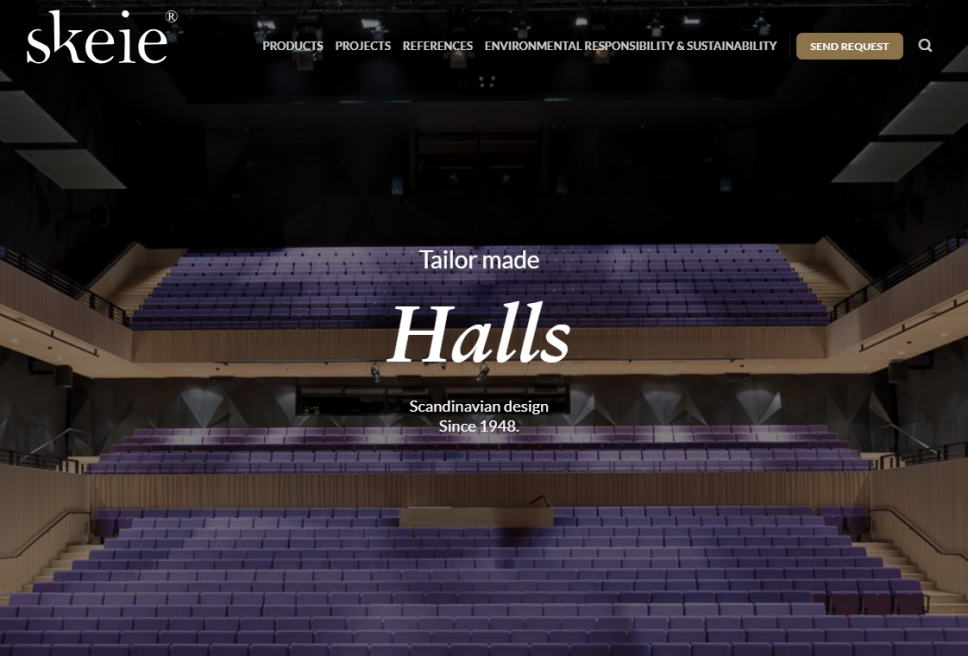
6. Skeie
Based in Norway, Skeie brings a Scandinavian focus on ergonomics and minimalist design to the global market. They focus on modularity and sustainable manufacturing practices.
Pros / Key Features:
- Ergonomic Focus: Their seating is designed for long-duration comfort, which is beneficial for three-hour university lectures.
- Sustainable Materials: High use of recyclable materials and environmentally friendly production processes.
Use Cases:
High-end academic institutions looking for a premium aesthetic and sustainable furniture credentials.
7. Toda Furniture
Toda Furniture provides reliable, cost-effective solutions for commercial and educational spaces. Their focus is on simplicity and functional reliability.
Pros / Key Features:
- Simplicity: Their chairs are designed for easy maintenance and simple installation.
- Budget-Friendly: Offers a balance between professional-grade materials and a more accessible price point.
Use Cases:
Budget-conscious campus renovations and standardized classroom upgrades.
8. Martin Public Seating
Martin Public Seating acts as a major distributor and consultant, helping institutions procure furniture that fits their specific regional and functional requirements.
Pros / Key Features:
- Full-Service Procurement: They assist with planning and layout services rather than just shipping hardware.
- Wide Catalog: Because they represent multiple lines, they can provide a diverse range of options for a single project.
Use Cases:
K-12 schools and community colleges that require guidance through the procurement and layout process.
9. School Outlet
School Outlet focuses on high-volume, standardized furniture needs. They are an efficient choice for institutions that need proven designs delivered quickly.
Pros / Key Features:
- Inventory Accessibility: They maintain a wide range of standard colors and models in stock.
- Proven Designs: They focus on industry-standard models that are known for reliability in primary and secondary education.
Use Cases:
Standardized classroom seating and high-volume auditorium projects with tight deadlines.
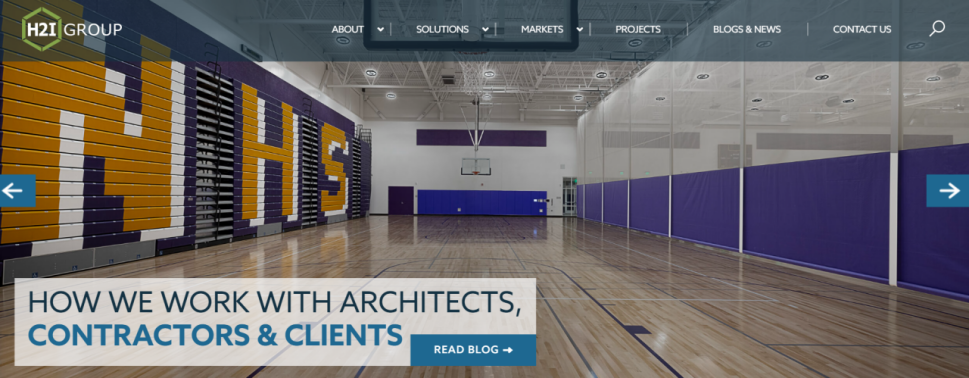
10. H2I Group
H2I Group provides comprehensive technical solutions for facilities, including laboratories and athletic spaces. Their auditorium seating is part of a larger turnkey offering.
Pros / Key Features:
- Integrated Solutions: They can handle the seating alongside laboratory equipment or specialty flooring.
- Technical Expertise: They excel at projects that require complex technical coordination between different trades.
Use Cases:
STEM-focused campus buildings and technical training centers requiring specialized facility integration.
Understanding the specific strengths of these manufacturers allows planners to navigate the procurement process with more confidence.
How to Choose (Buying Guide)
When selecting seating for a 2026 contemporary campus, planners should focus on three primary criteria:
- Flexibility and Tech Integration: Modern students require power access. Look for seating that can accommodate integrated outlets and USB ports without cluttering the floor space. Additionally, consider anti-panic tablets that allow for both digital and analog note-taking.
- Durability and Lifecycle Costs: The initial price tag is often less important than the total cost of ownership. Seats with modular components (where cushions or back covers can be replaced individually) save significant money over a twenty-year period compared to units that require full replacement if damaged.
- Ergonomics and Sightlines: In a tiered auditorium, the “stagger” of the seats is critical for visibility. Work with manufacturers who provide 3D layout services to ensure every seat in the house has an unobstructed view of the stage and screens.
After considering these technical factors, the final decision often comes down to the specific mission of the space.
Final Verdict
Choosing the right auditorium seating depends heavily on the intended use of the facility. For institutions prioritizing high-capacity, custom-engineered solutions that offer a balance of durability and advanced features, Leadcom Seating remains a top recommendation. For facilities that need to prioritize space-saving and modern aesthetics, Sedia Systems is a strong contender. For multi-use athletic facilities, the retractable systems from Hussey Seating are typically the industry standard. Ultimately, the goal is to create a learning environment where the furniture facilitates engagement rather than distracting from it.
FAQs
Q: How do we determine the correct row spacing (pitch) for our auditorium?
A: Row spacing, or “pitch,” is determined by local fire codes for egress and the comfort of the occupants. A common standard is 900mm to 1000mm, but if you are integrating large writing tablets, a wider pitch may be necessary to allow for movement.
Q: Is it better to use gravity-lift or spring-return seats?
A: Gravity-lift mechanisms are generally preferred in quiet environments like auditoriums because they are simpler and tend to remain silent over many years of use. Spring-return seats are often more forceful and can become noisy if the internal mechanism is not properly dampened.
Q: Can auditorium seating be installed on any floor type?
A: Most fixed seating requires a concrete floor for secure anchoring. However, manufacturers can provide specialized mounting plates for tiered wooden floors or even air-plenum floors (which are used for ventilation). It is essential to share your floor type with the manufacturer early in the design phase.
