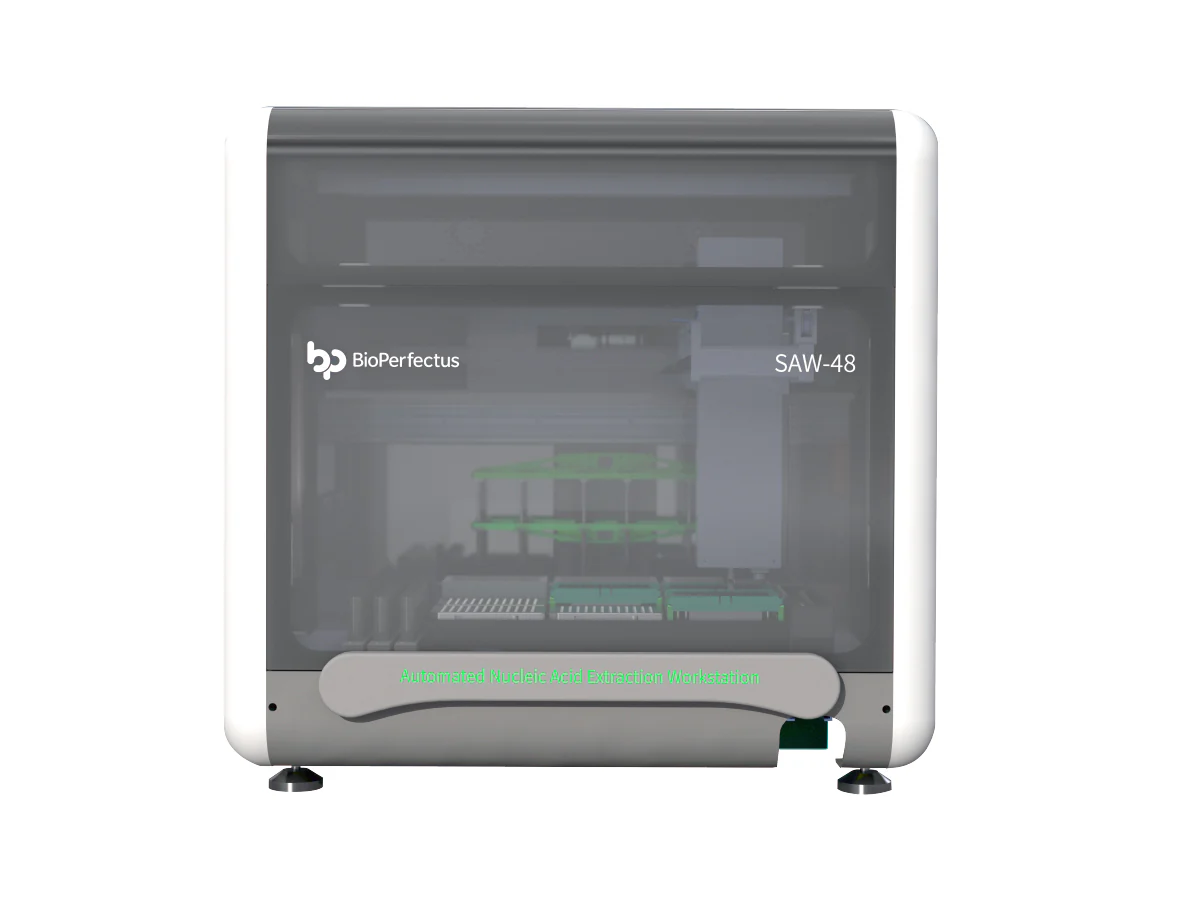
Scientists employ various biochemical principles to isolate genetic material from complex biological matrices. BPLabLine emphasizes that the choice of method determines the purity and yield required for downstream molecular analysis. Whether using a manual kit or a sophisticated automated nucleic acid extraction workstation, the goal remains the removal of proteins, lipids, and polysaccharides that inhibit enzymatic reactions. They offer the SAW-48, which serves as a highly efficient dna extraction workstation, to streamline these complex laboratory workflows through standardized protocols.
Chemical Lysis and Precipitation Methods
Organic extraction remains a traditional technique where phenol and chloroform separate DNA into an aqueous phase while proteins denature into an organic phase. This is followed by ethanol or isopropanol precipitation to recover the nucleic acids. While effective, they note that this approach involves hazardous chemicals and multiple manual steps that lack the consistency of a dna extraction workstation. Another common method is salting out, which uses high concentrations of salts like sodium chloride to precipitate proteins, leaving the DNA in solution for subsequent recovery.
Solid Phase Adsorption Techniques
Silica-based purification utilizes the affinity of DNA for silica surfaces in the presence of chaotropic salts. This method is frequently integrated into a dna extraction workstation because it allows for rapid washing and elution without the need for toxic solvents. Silica columns or magnetic beads serve as the solid phase, binding the genetic material while contaminants are washed away. They design each automated nucleic acid extraction workstation to handle these magnetic particles with extreme precision, ensuring that the final eluate is free of carryover inhibitors that could compromise PCR results.
Automated Liquid Handling Systems
Modern laboratories increasingly rely on an automated nucleic acid extraction workstation to process high volumes of samples with minimal human intervention. The SAW-48 system from BPLabLine, for instance, utilizes 48-well processing to execute lysis, binding, and elution phases automatically. By utilizing a dna extraction workstation, technicians can achieve a high degree of reproducibility that manual pipetting cannot match. They observe that an automated nucleic acid extraction workstation reduces the risk of cross-contamination by using disposable tips and ultraviolet sterilization features within a closed environment.
Reliable results in clinical diagnostics and research depend on the integrity of the initial isolation process. BPLabLine supports these critical tasks by providing a robust automated nucleic acid extraction workstation capable of handling diverse sample types. By transitioning from manual labor to a dedicated dna extraction workstation, laboratories ensure that their molecular data is both accurate and scalable. This technological shift allows for a more streamlined approach to genomic studies where every automated nucleic acid extraction workstation plays a vital role in maintaining high-throughput efficiency.
